
Look for an agency that takes an audit-backed, data-driven approach, not promises of guaranteed #1 rankings. Agencies that know what they’re doing will focus on long-term organic growth and provide white-glove services like audit-based strategies, documentation around E-E-A-T, etc. A good SEO agency will NEVER recommend manipulative practices like link schemes, keyword stuffing using automation tools, or invisible text. Be sure you can see past successes and lead scoring methodologies BEFORE you start working with an SEO partner. Beware of agencies that don’t discuss success metrics beyond page rankings and traffic and ensure their SEO strategy complements your overall marketing strategy.
Key Takeaways: How to Choose the Right SEO Agency
- Prioritize Transparency: A professional agency will prioritize long-term, sustainable growth through an audit-backed, data-driven approach rather than promising quick, “#1 ranking” guarantees.
- Avoid “Black Hat” Tactics: Never hire an agency that suggests manipulative techniques such as link schemes, automated keyword stuffing, or hidden text, as these can lead to long-term penalties.
- Look for Comprehensive Service: Quality SEO is not a single tactic; it involves a coordinated effort across Technical SEO (site health/speed), Content Marketing (relevance/authority), and Off-Page strategies (backlinks/E-E-A-T).
- Vet Their Methodology: Before signing, ask for proof of past success and clear insights into how they measure success beyond just vanity metrics like traffic.
- The Goal: The right partner should act as an extension of your business, integrating SEO efforts with your overall marketing strategy to deliver predictable, measurable returns.
SEO is one of the few channels in digital marketing that can offer predictable, measurable returns. When done right.
But dig deeper into finding the right SEO agency for your business, and you’ll quickly discover that there are a lot of companies out there selling SEO services. Everyone is an expert.
“I’ll get you on page one of Google. GUARANTEED.”
Wow, you’ll hear this one a lot.
So how do you weed out the agencies that won’t perform from the ones that are just really good salespeople?
Deciding on an SEO agency to work with is not a decision you should make lightly. More agencies are switched than any other provider because they aren’t performing well. 44% of small businesses that fired their SEO said their decision was based on poor results (As opposed to strategy, communication, or deliverables). Their SEO just didn’t work.
That’s why we put together this SEO agency buyer’s guide. We’ll break down what SEO agencies do, how to spot a quality provider, and the most important questions you should ask before signing on the dotted line. Use this as your SEO agency checklist when deciding on the right provider for your business.

But what does an SEO Agency/Company really do?
SEO stands for search engine optimization which basically means getting your website to rank better on search engines such as Google. Easy enough. But dig a little deeper and it’s much more granular than that. An SEO company is a team of individuals who work on rankings, traffic and increasing your online performance every day.
I always say – SEO is not just a single tactic.
There are technical aspects, content, and white hat strategies that go hand in hand with each other to bring targeted organic traffic to your website.
More organic traffic equals more potential customers clicking on your business over your competitors.
Generally speaking there are two main strategies that every good SEO company will employ: on-page and off-page SEO.
- On-page focuses on everything you have control over on your website. Such as content, structure, page speed, and technical optimizations.
- Off-page focuses on everything you don’t have direct control over on your website. Like backlinks, brand mentions, and your site’s overall authority.
Improving your site’s content and getting your pages to link to each other better can help your rankings become more relevant for your target keywords. Earning backlinks from other websites tells Google you are a credible source and should be trusted.
SEO takes a team of different categories working together. Whether that’s taking care of technical improvements on your site, writing blog posts, link building, or analyzing data to learn what’s working and what isn’t.
What an SEO Company Really Does?
So you want to know what an SEO company actually does?
It boils down to the work they perform and how they do it. An experienced SEO team will work on several strategies behind the scenes using technical skills, content marketing, and analytics to drive results.
The difference is a skilled team works across a broad range of tasks with the goals of ranking your website higher and driving more traffic and conversions.
Here are the important tasks they perform:
SEO Audit
The first thing I do when working with a new client is conduct a full SEO audit of their website. It’s like going to the doctor and getting a check-up. We let you know what’s going well, what needs to be fixed right away, and what we can optimize as we build your SEO strategy.
There are two audits we complete:
- SEO Mini Audit – This gives you a glimpse of the biggest and most pressing SEO problems on your website.
- Full Website SEO Audit – Everything that goes into making your website crawlable and appealing to search engines is evaluated. We go in depth on technical errors, on-page SEO, backlinks, website architecture, content, and more. This can include advanced technical strategies.
- SEO Audit Example – We conducted a full SEO audit for one of our clients and discovered they had severe crawl errors and pages that took too long to load. Once we made the adjustments the client saw organic traffic increase by 20% in 2 months.
SEO Audit Tools: Proper SEO Audit Checklist
When it comes to SEO audits, having the correct tools and methodology is essential. The goal of an SEO audit is to view your website through Google’s eyes so you can identify what you’re doing right and what you can improve.
My favorite auditing tools allow me to assess everything from on-page SEO elements and page speed, to mobile-friendliness and backlinks. Tools like Screaming Frog allow you to crawl your website and identify technical SEO issues such as broken links, duplicate content, and missing meta tags. Pairing something like Google Search Console or Ahrefs with this process will allow you to see the full scope.
SEO audits are the foundation of any successful SEO campaign. Not only do they help you understand where your website stands today, but they also shape your strategy for short-term wins and long-term success. I recently completed a comprehensive audit for one of my clients and discovered multiple crawl errors as well as pages that took too long to load. After making the recommended changes, my client enjoyed a 20% increase in organic traffic in just two months!
Another benefit of SEO audits is properly prioritizing your SEO tasks. Sometimes quick fixes such as correcting broken links or optimizing title tags can have a significant impact. Deeper technical optimizations and content upgrades are great for sustained growth. It’s impossible to know where to start without an audit though, and shooting in the dark won’t get you meaningful results on Google.
Keyword Research
SEO starts with Google keywords. Well, everyone types them into Google so yes. But I digress. The funny thing is even though it’s this simple, so many business owners skip keyword research or do it wrong and end up targeting irrelevant keywords.
Simplest way to think about keyword research: Understand your audience so well that you know the EXACT words they’ll type into Google when looking for your products or services.
For instance, running keyword research for “EcoSEO Agency” may unveil keywords like “best SEO agency” or “SEO agency near me” with high search volumes of 500+ searches per month. You’d evaluate each keyword’s search intent, difficulty, and conversion potential.
Knowing this, we can now inject these carefully selected keywords into our site content, landing pages, blog posts, etc. Essentially we’re targeting people who are already ready to buy something. Prospects who are at the purchase stage of their buyer’s journey.
On-Page Optimization
After determining your keywords, you’ll need to focus on on-page SEO which involves optimizing your website so search engines and visitors can better understand your website. You can think of on-page SEO like cleaning up your house before guests come over. The small things can have a major impact.
SEO companies will often look over your website and make tweaks to things like:
- Title tags to properly describe the page
- Meta descriptions to entice visitors to click
- Header tags (H1,H2, etc.) to format the page
- URLs so they’re easy to read and understand
Let’s say you own a local restaurant in South Africa and want to show up when someone searches Google. You may come up with a title tag like:
- “Best South African Restaurant in [City Name]”
Your meta description may then say:
- “Enjoy our authentic Cape Malay food prepared with a twist — book a table online!”
Now when someone searches Google, they’ll know exactly what your restaurant has to offer and will be more likely to click. Once on your page, you can use keywords such as “South African braai in [City Name]” or “Where to get bunny chow near me” which further lets Google know your location and what foods you serve.
Both searchers and search engines will know exactly what your page is about as soon as they find it. Pages that are optimized correctly can see an increase of 10–15% in click-through rates.

Content Creation and Optimization
Here’s SEO truth:
If no one cares about your content, search engines won’t care about it either. That’s why SEO agencies spend so much time developing, editing, and honing content on your website. Blog posts. Product pages. Landing pages. FAQs.
Sure, we research keywords and often sprinkle them into your copy. But most of our efforts go into creating helpful, readable, and valuable content that people want to spend their time on.
There’s a method to our madness here.
Search engine traffic is your largest channel.
Over 53% of all website visits come from organic search. That’s more than paid ads, social media, or any other channel.
As mentioned before, users turn to search engines with questions. Questions they want answered ASAP.
So Google rewards content that provides Experience, Expertise, Authoritativeness, and Trustworthiness (EEAT).
Your content can’t just look optimized–it has to be.
- Experience: Knowledge from real-world applications or hands-on experience
- Expertise: Understanding of the topic at hand
- Authority: Signals that establish your website as a leader
- Trustworthiness: Content that is accurate and reliable
Let’s say you have a technology blog where you write reviews of newly released tech.
You won’t rank as well with content that was copy and pasted from a manufacturer’s press release as you will with an in-depth review from someone who spent hours (or days) testing the product.
You get the idea.
An SEO agency will work with you to develop and refine content that satisfies search intent, follows proper on-page optimization structure, and checks all the boxes for EEAT.
Link Building
Link building may just be the most discussed (and misunderstood) component of SEO.
At its core, link building is simply getting other websites to link back to yours. When a trusted website links to you, it shows search engines that your content is valuable and should rank well.
As of this writing, over 66% of all pages on the internet have ZERO backlinks. This means most sites have extremely low authority. By gaining high-quality backlinks, your site instantly becomes more authoritative than the majority of your competition.
This is where SEO agencies shine. They reach out to these relevant sites and try to earn links for your business. Whether that’s blogs, news outlets, influencers, forums, or niche communities.
If you run an eCommerce business that sells clothes, we may reach out to fashion bloggers or online magazines that will feature your store. Suddenly you not only boost your rankings, but you start getting targeted referral traffic from customers interested in buying your products.
Bottom line: more authority = better rankings = more targeted traffic to your website.
Technical SEO
The easiest way I can sum up technical SEO is everything that takes place behind the scenes between your website and its users that your users will never see… until something isn’t working properly. Technical SEO at Scale revolves around friction.
How quickly your pages will load, how quickly search engines can crawl your site and how eligible your content is to be indexed in the first place. Factors such as rendering speed, crawlability and mobile-first indexing are just some of the elements we focus on.
Slow page speed has been consistently one of the biggest underlying issues we’ve found across many South African SME websites we’ve done audits for. Websites that take 4–6 seconds just to load on mobile are not uncommon, particularly those built on WordPress that are riddled with unnecessary plugins and uncompressed images. At this point you’re no longer debugging a “performance issue” — you’re literally losing money.
Google has published numerous articles saying traffic can drop 20% if pages take longer than one second to load, but it’s typically way more than 20%. We’ve seen pages lose upwards of 50% of their traffic before the H1 element even has a chance to render — this is especially noticeable on mobile with higher latency.
The caveat? Things will look OK if you test on a high-speed fibre connection. Your JavaScript will load just fine. Images will crisp.load deliciously. Nothing appears broken. But Googlebot may not be able to crawl your most important page because it’s bogged down by massive scripts. Or a visitor on an average device will bounce because they don’t want to wait an excessive amount of time for content to appear.
Enter: A simple agency website we recently launched. On paper — nice layout, responsive breakpoints, clean coding and damn good copy. But behind the scenes there were well over 5 tracking scripts loaded on the homepage alone, massive hero images and a bulky theme included with the website.
The page took roughly ~5.2 seconds to load. We stripped out unnecessary JavaScript and compressed images — dropping that load time down to under 2 seconds. Within weeks we saw an increase in indexed pages and things started to stabilise ranking-wise.
How does technical SEO relate to everything else you do? It’s the foundation. Build a great foundation and everything you do on top of it will be amplified. Ignore it and your best-laid plans of beautiful copywriting might not even be seen.
Local SEO
Local SEO targets potential customers searching for your products or services from around their city, town, or neighborhood – not the entire country.
Local SEO at Scale means optimizing for frictionless conversions from search to action: how quickly and accurately Google can find you, verify your business, and surface you to the right person at the right time. This includes Google Business Profile optimization, NAP consistency, local citations, localized content, local backlinks, and more.
Consider a plumber based in Cape Town. Their customers aren’t searching “best plumber in South Africa” they’re likely typing “emergency plumber near me” or “plumber in Sea Point”. Local competitors we’ve worked with across South Africa see an uplift of 20–40% in calls and enquiries within weeks simply by verifying their address and phone number, adding business photos, and garnering a few positive Google reviews.
Meanwhile bad data or missing information across the web quietly stunts your competitors growth — no matter how fantastic their service may be. The danger is you can look “good” on Google but be missing subtle clues that Google needs to show your listing to local customers.
Google Business Profile displays your hours, address, phone number — everything looks great. But missing information, stale images, wrong business category, or lack of reviews means Google may not rank you in the local 3-pack. And it doesn’t matter if your website design is gorgeous, loads in 1-second, or even if you’ve mastered SEO – if these local signals are weak, your ideal customers may never know you exist.
I worked with a client who recently fell into this category. They owned a café and (like most owners) assumed they were optimized for local SEO. Their Google profile looked complete when viewing on desktop. In reality, their Name, Address, and Phone number (NAP) was inconsistent across online directories, their listing was missing images, and they didn’t have localized content on their website.
Three months after we fixed these details, added geo-targeted content, built local citations, their Google Maps result jumped from page three to the top three results. This fueled foot traffic and measurable increases in reservations.
In essence: Local SEO is how you’re discovered by your local community. Get it right and your business will be found by your real target audience: nearby customers who are ready to buy. Ignore it and you might as well be invisible to the people around you.
Analytics and Reporting
Reporting. Analytics. Wait, what’s the difference? Aren’t those two things the same?
Sort of.
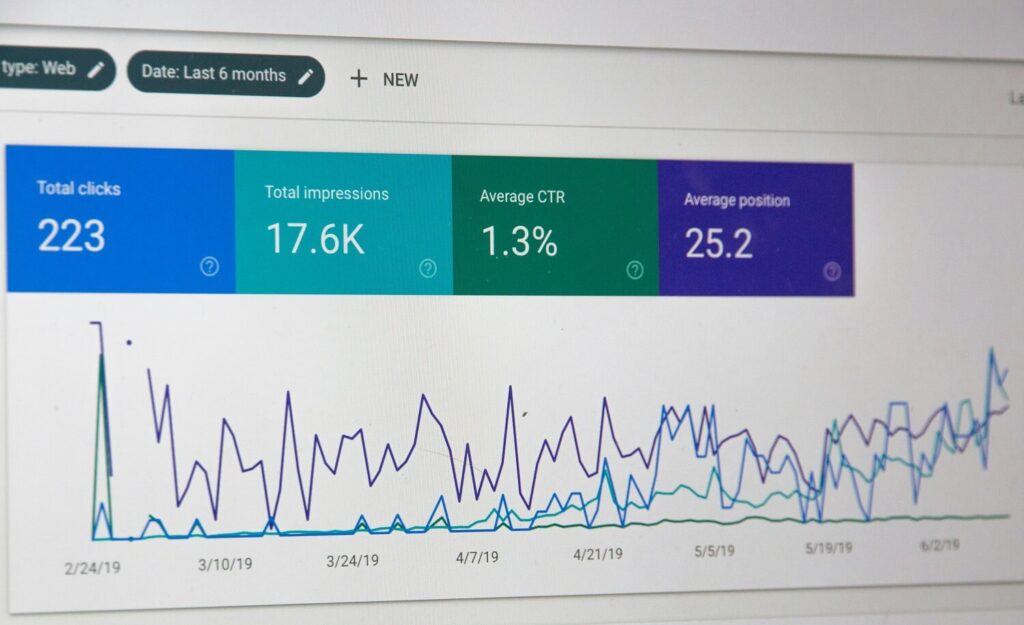
Every successful SEO Agency tracks numbers. Visitors, keyword rankings, conversions, bounce rate, click-through rates. Anything and everything they can get their hands on. The trick is digging into those numbers and understanding the story they tell.
Here at Scale, we take your GA4 and Search Console data and turn it into reports that are easy to read and understand. We highlight trends, pinpoint weaknesses, and surface opportunities so you have actionable takeaways that you can use to win.
“Oh boy, do I have to look at spreadsheets now?”
I feel you.
Don’t get me wrong: I love looking at data. I love seeing steady growth of traffic month over month. I love closing in on keyword rankings. I love cracking open a good ole fashioned spreadsheet.
But you shouldn’t have to.
In my experience, awesome agencies go back to clients months down the road after testing assumptions and making careful adjustments. Then they open up a report and say: “Remember how we were struggling with organic traffic? Well it’s up 30% and conversions have doubled.” It feels good to see hard numbers that show you’re moving in the right direction.
The problem is there are a lot of agencies that toss a dashboard on your desk. Hop on a Zoom call to discuss… a spreadsheet.
Not Scale. We dive into the numbers and understand WHY certain things are happening. Traffic is up? Great! Why? Are you ranking for more keywords? Which ones? Is traffic up but conversions are flat? Well, now’s the time to optimize that page copy or move that CTA button.
Point is: Analytics + Reporting is about more than just knowing where you stand. When you know what’s working (and what’s not) you open yourself up to incredible opportunities to win.
Conversion Rate Optimization
Next up: Conversion Rate Optimization, or CRO. This is the SEO-yielding practice that dips into those dark arts we mentioned above. Don’t worry, it’s not black magic!
Think about all of the work you’re putting into driving traffic to your site. What’s the point if someone visits your page, looks around a bit, then leaves without taking any action? You just flushed all of that traffic down the drain.
CRO prevents this from happening. Your agency reviews your site, conducts testing, and discovers potential layouts, features, and user flows that could be frustrating visitors (and encouraging them to bounce) without you even knowing it. Landing page optimization, CTA testing, funnel analysis, micro-conversion tracking, UX enhancements; these are all aspects of CRO.
Need some motivation? “Every 1-second delay in mobile load time can hurt conversions by 20%.” Want more stats? “There are 325 million seconds in a year. That’s enough time to blink 2.25 billion times.” We could go on, but you get the point.
Let’s look at a quick example. An ecommerce website with a checkout process that needs work. By making small changes (fewer steps, clearer calls-to-action, no friction), your website can experience higher conversions (filled shopping carts!). We worked with a client who saw a 35% increase in checked out orders in just 30 days by optimizing their 3-step checkout process.
Bottom line: Conversion Rate Optimization makes sure all of that traffic you’re sending to your site converts into real business results.
Competitor Analysis
SEO isn’t just looking internally at your own website, sometimes you have to look at your neighbors. Competitive analysis is the fun part where strategy meets detective work. Here at EcoSEO we analyse competitors’ keyword strategies, backlink profiles, content publishing frequency, and general themes.
Our goal isn’t to copy what they do that’s boring and lazy SEO. We use competitive analysis to identify gaps in their strategies. Opportunities they may be missing out on, whether it be low hanging fruit content, specific keyword clusters they aren’t ranking for, or topics they aren’t covering. Jumping on those gaps early will create tangible wins for your business in the form of traffic and conversions.
We recently completed an SEO audit for one of our clients and realized one of their competitors was severely lacking in local long-tail keywords. By capitalizing on these missed opportunities, our client saw a 15% increase in qualified traffic in just a few weeks.
User Experience (UX) Optimization
SEO and UX used to occupy two very different spheres but these disciplines overlap almost completely. From a UX perspective you want your site to be easy to navigate, load quickly and work intuitively. Google rewards websites that are unobtrusive and easy to use. This means easy to read layout, straightforward navigation, quick page loading times and mobile-first responsiveness.
But Google ranks sites higher than that. Sites that “feel nice” promote visitor engagement: clicking through articles, spending more time on your site, bookmarking for later and returning to your site in the future. All of these engagement metrics lead to better SEO results.
Take page speed for example — increasing a page’s load time from 1 second to 3 seconds leads to a 32% increase in bounce rate. Ok, fine, we’re being dramatic but think about it. Haven’t you ever been clicking through Google’s results when a page takes too long to load? Sighed in disappointment and started your search over?
We’ve done site audits for South African SMEs that cut load times from 4s down to under 2s, resulting in bounce rates reducing by more than 25% as well as better conversions.
SEO and UX overlap because good UX makes your site look better but also allows your SEO and CRO efforts shine through.

Choosing an SEO Company: 10 Questions to Ask
Finding the right SEO company can be a little like dating – you want your search engine visibility to be in good hands and end up with a lot of wasted time, money, and stress with a bad agency. So, to help you out, I wanted to lay out ten questions I believe you should ask any agency before you decide to get serious.
1. Which SEO techniques do you actually use?
SEO is constantly evolving. The problem is that some SEO agencies have not evolved and are still using 10-year-old techniques that don’t work anymore, and some…let’s just say, some agencies may use shortcuts that are…dare I say illegal? Asking about techniques gives you some idea of what goes on behind the scenes. You want a company that is white-hat, results are sustainable and their methods are designed for long term growth for your website.
Look for: References to on page optimization, intelligent keyword research, high-quality content creation and link building that focuses on building relationships and trust with other sites. These are the things that show they know SEO is about serving users, not tricking them.
The Red Flag: If any of their SEO techniques are short cuts or black hat, or they refer to “buying backlinks” or “automated content” or anything similar – RUN! Those results might look good for a few days or weeks. However, the long-term risk to your website is huge.
2. How much experience do you have with my industry/business?
SEO is a lot easier when you’ve done it in your client’s industry or a close sibling of it. If you’re selling SaaS, it’s nice if they understand that industry’s competitive nature, popular channels, marketing lingo, pain points, opportunities, and so on. If you’re a niche retailer, it’s nice if they have worked with similarly focused clients.
What to look for: If they understand your market well, they’ll be able to point to case studies or examples of work from clients that are at least comparable to your business. They will also be able to explain their approach in a way that demonstrates specific experience with clients in your sector.
The Red Flag: They give you a blank stare, and the only thing they can come up with is “clients” like “Microsoft” and/or “all kinds of industries”. Great, but let’s move on to the next one.
3. How do you measure success in SEO?
SEO is NOT a numbers game and should not be. And it’s not “ranking #1 on Google”. It’s nice when that happens, but success in SEO is much more meaningful when defined in terms of organic traffic growth, engagement metrics, and ultimately conversions that matter.
What to look for: The agency should be able to articulate which KPIs they monitor, why, and how (tools, methodology). They should be able to tell you about their reporting frequency, and they should be able to show you a sample report.
The Red Flag: They can only talk about rankings. Or, they aren’t data-driven in their approach to reporting, communication, and SEO in general.
4. How soon can I expect to see results?
SEO isn’t magic. It takes time, patience and consistent, diligent work. If someone is promising you instant top rankings, or claiming they can have you at “#1 in a week”, take that as your cue to start running in the opposite direction as fast as you can. Solid, sustainable growth takes time. It’s a slow and methodical process, like a garden.
What to look for: An honest agency will provide you with a realistic timeline based on your industry, competition and goals. In many cases, you could start seeing some noticeable changes within three to six months (higher traffic, rankings, etc.). The larger the results, the longer it will naturally take.
The Red Flag: Any business guaranteeing first-page results in a few weeks is either not doing the work properly (or at all) or utilizing shady methods that could potentially damage your site in the future. SEO is a marathon, not a sprint.

5. Do you have any case studies or success examples?
You want to make sure an SEO agency can get results, and not just talk a good game. This is especially true if you have a business that’s similar to past clients of the agency. There’s something to be said for seeing how an agency can apply their approach to your unique situation.
What to look for: An agency that has successfully helped clients in the past should have case studies to show for it. You don’t want over-the-top marketing speak here, but actual before-and-after results with numbers to show performance. Traffic increases, ranking improvements, and conversion rate boosts are all solid things to highlight in a case study. Bonus points if they can walk you through the strategy they used, and how they measured progress toward a tangible outcome.
The Red flag: An agency that can’t provide solid examples or shies away from answering the question is either a.) inexperienced in your field or b.) untrustworthy and not being transparent.
6. What is included in your SEO services?
SEO is an umbrella term for a lot of different activities, many of which are often grouped into areas like SEO consulting, onsite/on-page SEO audits, on-page/on-site SEO optimization, local SEO, link building, technical SEO, content marketing, online reputation management, and results reporting. Understanding exactly what’s included in the service you’re paying for ensures the agency can actually provide what you need.
What to look for: You should get a clear and concise answer here, with elements that can include keyword research, content creation, SEO audits, on-page/on-site optimization, link building, performance tracking, and more. The agency should also be willing to point out what tools they use to track and report on performance improvements and changes to your site.
The Red Flag: An unclear or generalized answer to this question may mean they aren’t covering all of the bases when it comes to SEO services. You may be paying for a service that’s less than what you actually need.
7. How do you stay up to date with search engine algorithm updates?
Google and other search engines are not stagnant. Their algorithms change frequently – some updates may impact your rankings only slightly and gradually, and some (Google’s “Big Gulp” updates, as we call them at Plotnine) can drop a website or send it soaring in one fell swoop.
For instance, in 2022 Google published a total of 4,725 changes to search. That’s an average of 13.0 updates each day, from new ranking signals to algorithm improvements to updates to their user interface.
If a digital marketing agency is not keeping up with these updates, the SEO strategy they implemented last month is going to start becoming less and less effective in no time.
What to look for: While it’s normal for an agency to not be aware of every little update or tweak made to the search engines, it should generally have a way to account for its awareness of the state of the industry. You will see this in a response where an agency discusses how it keeps up with changes, whether it’s reading SEO and tech news, attending events, testing strategies, running A/B tests to find new solutions, or something else.
The Red flag: Dismissive of new updates or has no system for keeping informed. Your SEO team needs to be agile, which won’t be the case if they’re not aware of the current state of search engines.
8. How do you deal with website penalties or issues?
On the topic of changes and updates: sometimes, even with the best intentions, a website can run into problems. Whether that be due to a Google update, a link issue, or a technical issue or glitch, sometimes websites can take a nosedive.
In these situations, you’ll want a team that rolls up their sleeves and figures out the issue – rather than shrugging, panicking, or putting off the investigation.
What to look for: You should expect the agency to be able to explain to you how they identify issues, including penalties – such as abrupt traffic drops or changes in ranking or site visits from unusual referral sources, among others – and to describe how they would go about troubleshooting and resolving issues if they occurred. This could mean conducting a thorough audit of the site, identifying and disavowing bad links, working on technical SEO to identify and correct issues, and so on.
The Red Flag: Dodges the question, can’t answer specifically or confidently, and does not appear to have experience with identifying and fixing website penalties or issues.

9. How do you perform link building?
Link building is one of those SEO processes that sound easy but can easily be performed wrong. Having the proper backlinks can be beneficial to your rankings. After all, it’s like a vote of confidence from another domain. A poor-quality link or spammy link? Well, that could be detrimental. In fact, in the SEO community it’s often joked that quality over quantity is king. In surveys, close to 94% of SEOs claim that 1-3 strong relevant links are better than 50-100 weak links.
What to look for: A great SEO agency will prioritize earning links. This includes posting guest articles on high-quality blogs and websites, partnering with relevant sites, and performing outreach. An emphasis on relevance and domain authority will shine through.
The Red flag: Erm, buying links? Link farms? Those are quick red flags. Obviously this sort of behavior will put your site at risk of ranking penalties or even suspension by search engines. A reputable SEO agency will not even consider this as an option. They will also emphasize natural, “white-hat” strategies. If they don’t mention it, it’s probably not part of their strategies.
10. How will you communicate with me and how often will I receive updates?
SEO is a long-term strategy so you’ll want to know that you’ll be in the loop. You’ll want to know what’s going on, what’s working, what’s not working. Great communication not only helps with transparency, it also helps build trust. Being able to see results as they happen really helps you understand the value of the work.
What to look for: Ask them exactly how they keep you in the loop. This can take the form of weekly/monthly reports, scheduled calls to go over performance, or response times to inquiries. It should be easy to track performance and ask questions as needed.
The Red flag: If they can’t give you a straight answer on communication, or it sounds like they only do so when contacted, be wary. The longer the pause on communication, the more likely it will be to drive dissatisfaction.
Case Study – Invisible to Top-Listed in 9 Months
This is a local moving company, Quality Relocations. When they came to us, they had one issue in particular. You guessed it – they were invisible. Despite great service and a solid product, they were in the same boat as 90% of local businesses: they did not have a single online presence.
The business owner was keen on results–but wary of SEO companies that overcharged or underdelivered. This is understandable, as it’s a common concern amongst business owners, but he got lucky and found us.
Our strategy for them was built on trust, and focused on results that mattered: locally. Our strategy was simple, but effective:
- Solid Foundation: We built a brand new, fully functioning, SEO-focused website. No technical jargon, no unnecessary features – just a site built to perform.
- Local Focus: Heavy work was put into their Local SEO, including optimizing their GMB and generating authentic customer reviews. A few small steps, but in the right local spots.
The result? Nine months later (that’s less than a year, for those who don’t love numbers), they had gone from invisible online, to consistently ranking in the Top 3 on Google for all of their relevant search terms. Today, the owner receives quality leads, day in and day out without having to pay a cent for Google Ads or Facebook Ads and can focus on what matters to him: running his business.
Sometimes, all it takes is a solid foundation and local know-how to overtake the big promise makers.
10 Warning Signs You May Be Partnering With a Bad SEO Company
- SEO Service With Instant Results – If someone says you can reach number one in the first few months then you should be cautious, as most likely they will be using a black-hat technique, or may at some point be cheating that may have a negative effect on your website and result in Google penalising your site.
- No Explanation of What They Are Doing – Google do not like people gaming the system. You should always be able to view an explanation of the SEO process and every step they are taking when you are speaking to a good SEO company.
- Keyword Stuffing or Link Farms – Keyword stuffing, link farms, hidden text, cloaking or doorway pages might seem like attractive options if you are after instant gratification. But the fact is, these are some of the worst things that you can have done for SEO purposes. Good search engine optimisation companies will not even entertain the thought of using these short-cuts.
- One Size Fits All Approach – Search Engine optimisation that is not targeted to your specific industry, business goals and traffic sources will be ineffective, and will not drive the targeted results you desire. Be aware of SEO packages that seem generic or “ready made” for just anyone.
- A Lack of Contact – If you cannot get hold of your SEO company or you feel they are not listening to your needs or updating you with progress this is a definite red flag. You need your SEO company to not only work for you but to be your partner and consultant in any SEO campaigns.
- Failure to Provide Regular Reporting – Reporting is a huge part of any SEO firm, if they aren’t reporting to you on some level of performance, how are you even supposed to know if they are doing anything at all, even if it’s just one or two incremental changes in the short term.
- Rankings-Obsessed – Rankings are a part of SEO, but they are not everything. Traffic, conversions, and user experience matter too. If an agency is fixated on moving numbers on a graph and doesn’t talk about any other aspects of SEO, they’re not a good fit.
- Big Promises for Guaranteed Success – SEO is not an exact science, and no one should be promising guaranteed first-page rankings or other “unrealistic” sounding time frames. SEO is a long-term strategy, so an agency should be as well.
- No Emphasis on Quality Content – Useful, unique, and engaging content is one of the most important parts of quality SEO. If they don’t talk about building content for your audience and clients, they aren’t focused on real growth.
- Outdated Practices – SEO is an ever-changing field, so if the company you are looking at isn’t aware of recent algorithm changes, new trends, or up-to-date best practices, your site will be left behind. A good SEO firm will be curious, knowledgeable, and adaptable.
Read more about the 11 Red Flags when you choose an SEO Agency.

FAQs
How much should I expect to pay for SEO?
SEO pricing varies, and to be honest, this is part of the problem. It varies by industry competitiveness, scope of work, and services required. Some companies pay a few hundred dollars a month for some assistance, while others are willing to shell out a few thousand monthly for a large-scale effort.
Why should I use SEO for my business?
SEO is all about ensuring people can find you. When your site shows up in search results more, you’ll see more clicks, more brand awareness, and—when you execute properly—more inquiries and sales.
Can SEO rank my site number one?
Short answer: No. Long answer: If someone tells you they can guarantee you number one, I would be weary of their service. Google is always updating its algorithm, so earning (and maintaining) that coveted spot is never guaranteed. What a reputable SEO service can do is give your site the best chance of rising as high as possible by employing Google-approved best practices.
What is the difference between organic and paid SEO?
Organic SEO is building your site to provide the best possible content, links, and UX in the hope of climbing up the rankings. Paid SEO is where you simply pay to show up in the results. They both can be effective, but are very different.
How do I know if my website is SEO optimized?
In general, a good SEO site loads quickly, has solid UX on mobile, and answers people’s questions. If you are ranking for the right keywords and your visitors are engaging with your content, you’re probably on the right track.
What do I do if my SEO campaign fails to deliver results?
There can be cases where SEO fails to live up to its promises or targets. If your SEO campaign is not delivering desired results, you need to find the best approach to resolve this situation. Reasons behind slow or no results can be many. Keywords not being appropriate for the content, lack of quality content and increased competition are a few examples.
Is it possible to improve the UX of my website with SEO?
SEO is not only about making your website visible and accessible to search engines. Most of the on-page optimization measures involved with SEO overlap with enhancing UX (user experience). Navigation, load speed, consistent and easy to use site layout, especially on mobile view are some areas of your website that are important for both SEO and UX.
What is local SEO and how important is it for my website?
Local SEO is search engine optimization for location-specific searches. If your business has a physical location or is targeting a specific region for its products or services, then it is very important for you to be visible to local search queries. Terms like “electrician near me” or “dentist in Durban” are extremely valuable for local businesses.
Do search engine algorithms have any effect on my SEO activities?
Yes, search engines like Google or Bing are always changing their algorithms. It can be either minor updates, or major updates that send shockwaves across the online world. It is important to stay informed of such changes so that your SEO efforts are not misaligned and remain on the right track.
How do I know if my SEO campaign is progressing or not?
Keyword rankings, traffic, and conversion rates are some of the basic progress tracking tools and reports you can use to find out how your SEO campaign is doing. Google Analytics is a widely-used tool that helps measure most of the factors on which SEO progress depends.
Key Takeaways
- SEO is a powerful strategy for increasing your online visibility and driving traffic to your site.
- When choosing an SEO company, ask the right questions to ensure they align with your business goals and use ethical practices
- Keep an eye out for red flags, such as overpromising quick results or using unethical tactics.
- SEO is an ongoing effort, and choosing the right partner will make a significant difference in your long-term success.
Conclusion
Hiring an SEO company is not just another step in the checklist of setting up a business. It actually defines how your business will be seen online. So by asking a few important questions and getting a good sense of how they approach the work behind the scenes, you’ll make short work of spotting the real experts…and avoiding those who are not.
As a final note, I always suggest to those who are new to SEO that it is always better to view it as a long-term investment, rather than a “get rich quick” solution. If you can find a partner that understands that concept, your visibility will improve, your traffic will increase, and, before you know it, those changes will start to appear where they matter most: on the sales sheet.


)