UrbanNest
It was back in 2018 when Lerato Mkhize came to the realisation that the old family recipes she had squirreled away in a stained, dog-eared notebook were not serving anyone much good. UrbanNest began almost by accident — not out of a burning desire to “launch a brand” but because it irked her. Really irked her, that the food she had grown up eating was increasingly falling by the wayside. Bobotie, bunny chow, malva pudding … the kind of food that is, by its very nature, someone handing you a slice of their own childhood.
At first, she kept it casual. A small blog for family and friends, aunts and cousins, for anyone who happened to ask, “Hey, do you still have that recipe for…?” But something changed. The moment she stopped trying to sound like a ‘proper’ food blogger and began to write as people really talk around a kitchen table, i.e. in a roundabout way, a bit of a mess, a bit emotional, people didn’t just come. They stayed. And they kept coming back.
Essentially, that has always been at the heart of UrbanNest. Lerato had no pretensions when it started — no heady desire to be an influencer or whatever people like to call themselves these days. She simply wanted South African food culture to continue living — and not just living, but living loud. These days more than 37,000 people visit Urbannestcuisine each and every month to pick up a recipe, pick her brain about some kitchen trick or just read through the stories she weaves in between the steps.
Coincidentally enough, 2024 has seen South Africa’s food and beverage industry surpass R150 billion. No, scratch that. 2024 has seen the rest of the world, at long last, realise that African flavours are not a one-season “exotic” wonder — they are the beating heart of a table. For Lerato, of course, it’s always been about something deeper than trends. For her, UrbanNest has always been a quiet love letter to who she is.
Somewhere along the line, in the midst of all this, Lerato reached out to us at EcoSEO. She had the brand’s heart figured out already — the taste, the memories, the integrity. What she needed was the reach — and that was where we came in.
Lead Time: 4 Months
Sector: Culinary & Lifestyle
Target Type: Culinary & Lifestyle
Demographic: Food enthusiasts, aged 25–50, interested in South African culture and cuisine
Website Goal:Inspire Culinary Exploration, Build a Community, Drive Traffic and Monetization, Promote Food Culture
Services: Technical SEO, Optimising Schema Markup, Building Backlinks, Optimizing Images


366%
Increase in Organic Traffic

The Challenge
After six years of hard work and blood, sweat, tears and love, Lerato’s UrbanNest had the sort of community that most food bloggers can only fantasise about. The engaged, word-of-mouth “I tried your recipe last night and my kids loved it” crowd. But as all food bloggers know, community doesn’t equal visibility.
She was averaging 18,700 organic visits per month. Not bad by any means, especially for a website that had begun life as a labour of love. But not remotely in line with the audience her content merited.
And the bitter pill to swallow? She wasn’t showing up on Google’s first page for searches like “traditional South African recipes”. For a food blogger, that’s the digital equivalent of being banished to the back shelf of a grocery store. People won’t stumble across you unless they’re already looking for you.
It didn’t take long to run diagnostics when we finally took a serious look under the hood:
- Need Keywords: She wasn’t ranking for key South African cuisine search terms. Zilch.
- No Schema Markup: Google had no way to “read” her recipes in a way that could enhance their presentation in search results.
- Lack of Backlinks: Almost no quality backlinks to support the site’s authority.
- No Alt Tags: Stunning imagery — but not a single one optimised, resulting in missed opportunities in Google Image Search.
June 2024 and Lerato finally spoke the words she’d been thinking for months:
“Help me make UrbanNest visible again.”


Helping UrbanNest’s SERP Presence Shine with Recipe Schema
One Ingredient Google Hadn’t Been Aware Of
Ah, deep-dives. The best kind are always the ones where you spend an entire afternoon staring unblinkingly at Semrush while your coffee goes cold and your sanity slips a little. But such was necessary, in this case. We had to understand not just where UrbanNest was being found… but where it was absent.
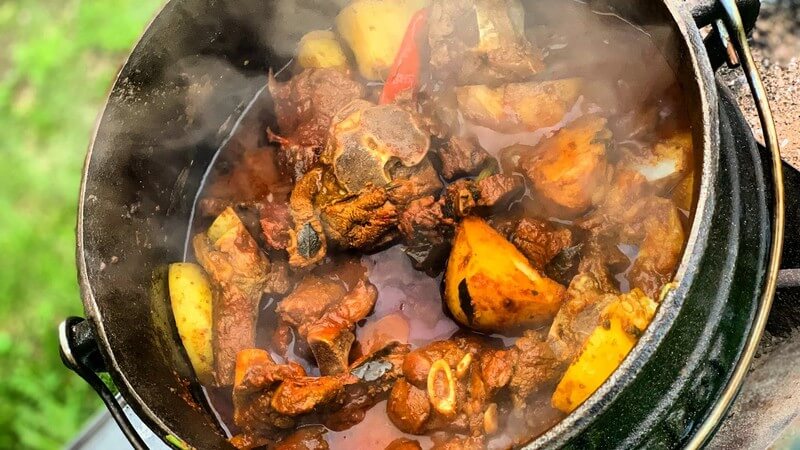
What we soon discovered was fairly clear: Lerato had a number of gorgeous, well-written recipes — bobotie that transported you straight back home, koeksisters so devastatingly good that your diet plan will be entirely forgotten after the first mouthful — but there was no recipe schema whatsoever.
It’s akin to taking a Michelin-star quality restaurant and not providing a sign outside it. There was no indication on the SERP for these pages, other than the basic title and URL. Google, of course, had nothing extra to work with. Nothing to entice readers with the offerings of the site.
Time to roll up our sleeves. We annotated all: ingredients, time required, cook time, ratings — all those things that make up a recipe. Within a day or two, UrbanNest’s pages went from “just another blue link” to small bundles of information and aesthetic delight. We now had those stars to show, along with cooking times and those small, informational things that make users curious enough to click… or hungry enough.
I cannot say for certain, but it definitely felt like Google had noticed and been pleased. At the very least, CTR told a story that backed up my happy feelings: we had over 12,400 new keywords that were now SERPING rich snippets, and CTR shot through the roof at 22%.
Readers, it seemed, were not randomly stumbling onto UrbanNest pages — they were purposefully clicking them.
Helping Understand the Queries of the Audience
The Language They Wanted To Hear
Believe it or not, we’ve always held one core value relatively dear: we get much more genuine traffic when we stop pretending to lecture our audience, and start delivering the answers that they actually need. That was all, really. It might seem like a blindingly obvious truth, but I can’t tell you the number of websites we see that simply don’t remember it.
Armed with this thought, we first returned to Google Search Console and pulled out actual searches that real, living humans were making with a query box… things like “how to make an authentic bunny chow” or “what is the difference between Indian and South African curry?” As I said: a lot can be learned by simply listening to what your visitors are asking. We also considered (another one of our golden rules) the People Also Ask snippets (did I mention that was gold?) and we then considered how these results would inform how we could restructure certain posts.
Of course, we never changed Lerato’s voice at the core of the writing. We’ve all been to that chef who insists on being flamboyant and overbearing with their menu descriptions and recipe descriptions. It simply never works — you lose the reader before they’ve even had a chance to engage.
The Lerato voice is the reason UrbanNest worked: the easy, nostalgic, slightly frantic way that she told her stories, interwoven with incredible recipes. We added to it, rather than rewriting: quick FAQ lists written in simpler language, slightly nuanced explanations, direct answers to the very questions people had been seeking (literally) as they Googled at 3am.
And it worked, fast. Readers lingered on the pages. The time-on-page of the reworked posts increased by 30% which, on reflection, makes complete sense. When a user lands on a page that they feel has heard them, that has provided them exactly with what they needed — well, they don’t leave a site quickly. They tuck in for dessert and wait for seconds.


How Driving Images Can Drive Traffic
Converting images into magnets that attract traffic…that was our secret (silent) wish, anyway. And no offense but, if you have been perusing our images before, you’d agree that they are the type that leave you scrolled midway while you think to yourself, “okay, I need that in my life.” It was just Google image search didn’t want to see our light. All our pictures did was stare back in silence at us…beautiful, but in vain.
We then started perfecting the details that a lot of people neglect to do. Namely, we started giving the images proper alt descriptions (not the shady kind that you fill up with irrelevant long-tail keywords) that truly described what was on the plate. We reduced the file sizes so the page loads were not going into 2007 amnesia, and also included an image sitemap just in case Google needed a tiny little nudge.
You know the result, right? We took traffic from image search not by a few percentage points, but by 15% out of all traffic. The percentage initially hovered at 3%. We were bringing a completely new segment of visitors to UrbanNest because something delicious got their attention first.
Securing Relevant Backlinks
Asking The Cool Kids To Hang Out With Lerato
A food blog can write the most heart-wrenching love letter to every recipe in its arsenal. But, like the jerk in high school who thought he was ‘the man’ because his own mum thought so too, if your blog isn’t seen as an authority on the topic, search visibility is going to be a bit of a reach.
So we dusted off Ahrefs and had a mildly sycophantic peruse through where Lerato’s competitors were sourcing backlinks. It was like spying on where the cool kids in the food blogging industry liked to hang out.
We started chasing down the same sort of solid backlinks we spotted:
- guest posts on other local food blogs,
- features on larger international food publications,
- and a few considered collaborations with South African food brands with more reach than we had.
Fast forward a few months, forty-two quality backlinks later and UrbanNest’s domain authority had jumped from 28 to 39. That one increase alone meant UrbanNest now had the juice to rank for more difficult keywords like “traditional South African recipes” and the blog went from being beloved by readers to being a site that started to earn the kind of authority that defines search visibility.


The Results
Funny how four months can feel like an eternity and yet, also like no time at all. It’s all happened so quickly, but it took those four months to transition UrbanNest from a small and happy niche on the internet to a (slightly) moving force in the South African food space.
You could almost chart it by the week: The incremental rises. The surprising comments. The inbox that decided it had suddenly found its voice.
In a way it was nothing new, but in another way it was almost miraculous, if only because these metrics weren’t all part of a strategy — they became one. This is how the numbers look now, if we take before-and-after snapshots.
- Organic Traffic: The first marker and often, the one people look at when they say SEO is a game of patience (or that SEOs don’t have an understanding of what “successful” means). UrbanNest saw its traffic rise from 18.7K to 87.2K monthly visitors, which is a 366% increase. It’s a cold and sterile way of looking at it, of course, because when you’re sending out newsletters that go something like, “Is it cool if I use this bobotie recipe to impress a bunch of friends for Sunday lunch?” you feel it.
- Keyword Rankings: There was a time when UrbanNest was utterly invisible in Google’s eyes, barely ranking for much beyond safe, hyper-targeted keywords (hello and good-bye to broad and/or short-tail keywords). The optimization added to the blog meant UrbanNest now ranks for 29.8K keywords. And 1.8K of those? They’re in the top three — which in the digital classroom means you’ve got a seat up front.
- Rich Snippets: While snippets for specific food posts have a lot to do with structured data (there’s more on this in the insights section), UrbanNest now has ~12.4K keywords for which Rich Snippets are now triggered, giving it a fighting chance at capturing interest. The stars, the prep times, those small but important blasts of visual luxury (color/imagery that encourage people to pause) that make each of the recipes sing. It’s not uncommon to get a page where UrbanNest appears in several SERPs (search engine results pages) and you can actually recognise some of the photos just by scrolling through.
- Backlinks: The score on this one reflects what is, essentially, the sum of all the above: A domain authority that nudged its way up from 28 to 39 after earning 42 really, really good backlinks in a relatively short space of time. It’s not that UrbanNest was ignored by the internet before this — it was loved and well-read — but now it’s showing up with regularity in those “Top Spots You Must Try” pieces.
- Image Search: Image searches now account for 15% of total traffic, up from a measly 3%. People liked the food photos from the start, it just happened that they never really showed up in image searches until this kind of image-specific, technical TLC was added to the equation.
And, of course, the unexpected runaway winner?Lerato’s Traditional Bobotie with Yellow Rice.
When the FAQs were cleaned up, the images retouched, the post became a winner, currently logging 5,600 visits a month. You could fill up a really small arena with that number of people and yet, you’d also probably have to get in line behind 5,600 others because they’re all after the same thing: The recipe.
We didn’t want to play SEO wizard. We didn’t want to inject some life into UrbanNest and then twist it beyond what made it what it was. Instead, what we did was pair the kind of very specific and occasionally nerdishly technical work with the lifestyle storytelling that UrbanNest was already good at and so, while ranking took priority (SEO will never be anything but numbers at the end of the day), it never got in the way of the voice, or the writing, or the people behind it all.
Now UrbanNest feels less like “a blog someone happens to run” and more like a communal feast. Visitors from Cape Town. Visitors from California. Visitors from cities and towns and villages we can’t even name because they’re so obscure or so new, but who come in search of something and often, leave with a piece of South African food culture, a tradition, a trend, a simple recipe and, of course, a story.
Technical Tools:
Semrush, Ahrefs, Google Search Console, Google’s Structured Data Markup Helper, TinyPNG, Google Analytics

SEO Services
Semrush, Ahrefs, Google Search Console, Google’s Structured Data Markup Helper, TinyPNG, Google Analytics
What Our Clients Say
Here’s why clients enjoy partnering with us